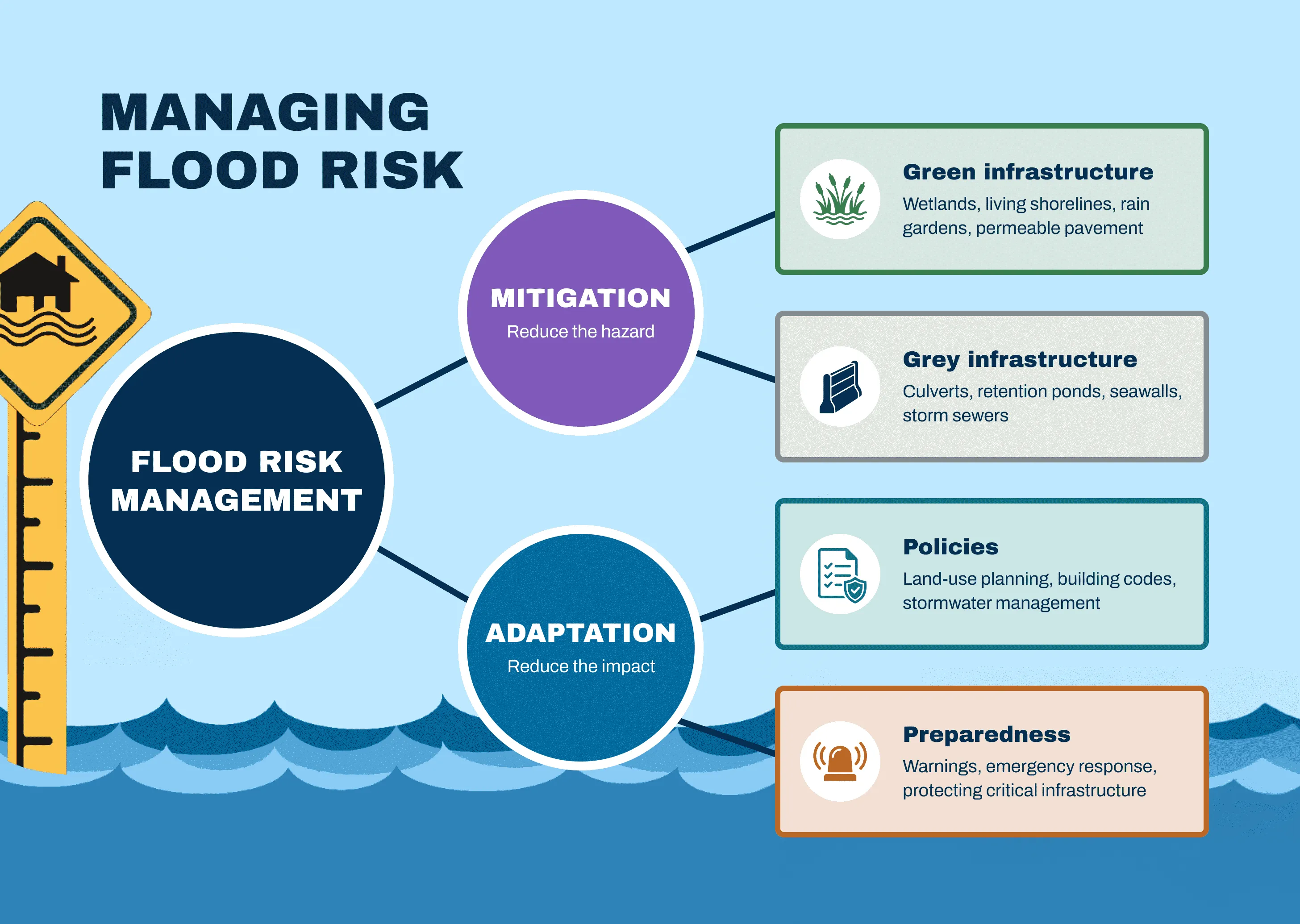
There are two main approaches to managing flood risk: mitigation and adaptation.
- Flood mitigation: Actions to reduce or prevent flood damage.This includes both “green” infrastructure, which uses plants, soils, and landscape design to manage flood waters (e.g.living shorelines and permeable pavements); and “grey” infrastructure, which typically uses hard materials like concrete, steel, or rock (e.g. dams, levees, and concrete structures).
- Flood adaptation: The adoption of new policies (e.g., zoning bylaws and planning regulations) and behaviors (e.g., flood preparedness) that help to manage risk and damage associated with flood events.
Flood management in Canada involves a combination of federal guidance, provincial policies, and regional approaches. Together, these frameworks help communities understand flood risks, guide land use planning, and reduce potential impacts.
At the federal level, national guidelines provide standardized methods for flood mapping, risk assessment, and mitigation planning across the country. Programs also support the development and sharing of flood hazard data. Read more
In Nova Scotia, flood management is primarily led by municipalities under provincial legislation. This includes land use planning, development restrictions in flood-prone areas, and emergency preparedness requirements. Read more
Across other provinces and territories, approaches to flood management vary based on local conditions, but all jurisdictions have developed strategies, guidelines, or programs to address flood risks. Read more
Financial support for this project was provided in part by Natural Resources Canada through the Flood Hazard Identification and Mapping Program (FHIMP). We also gratefully acknowledge the funding and support provided by the Government of Nova Scotia through the Municipal Flood Line Mapping Program (MFLMP).